June 7, 2010 by Fiction Editor Beth Hill
last modified March 23, 2016
I’ve added a few new recommendations to this list, especially for those
shopping for gifts for the writers and editors in their lives
_____________________________
_______________
I’m firmly convinced that all writers and editors should have their own library of resource and reference books. For all its strengths, the Internet doesn’t always have the most thorough answer at the moment you need it. And if you have no connection, a low-tech reference book is easily your best resource.
The left sidebar here at The Editor’s Blog is filled with links for some of my favorite reference materials. I recommend each of these for both writers and editors. (The right sidebar may contain additional writing resources that I feature when I find a book I think others will enjoy.)
There are different kinds of writing resources, including reference books for grammar & punctuation, style aids, and books filled with tips on how to start writing or encouragement to keep writing. All are valid resources, depending on your need.
While you may not check out a particular book until you need a specific answer to a writing problem, I suggest that you read one or two writing books—on craft or encouragement or grammar rules—each year. Going to a source for a specific need gets the job done. But these books are filled with so much more, it seems a shame when their wealth of knowledge sits on a shelf, ignored.
Read a grammar/punctuation book every year. You’ll learn something new. I guarantee it.
If you need practice with a particular skill or writing area, pull out one of Julia Cameron’s books and go through the writing exercises in it.
Invest in a good dictionary or two or three. No, we can’t all afford the full Oxford English Dictionary. But the Shorter OED is well worth the money if correct word usage is integral for your career.
If you’ve lost the fire for storytelling, grab a book from one of your favorite authors and immerse yourself in a fictional world to relight the flame.
♦ ♦ ♦
From my recommendations—
Grammatically Correct by Anne Stilman. My absolute favorite grammar & punctuation resource. I try to read this cover to cover every two years. It’s easy to follow, the examples are clear, and it covers nearly every question I’ve ever had on punctuation and grammar.
New Oxford Dictionary for Writers and Editors. This one sits on my desk next to my Chicago Manual of Style. I use it for spelling (one word, two words, or hyphenated word) more than for definitions.
How to Grow a Novel by Sol Stein. This one has writing tips, but when I read it, I’m reminded of what I love about writing. I use How to Grow a Novel to charge my writing batteries.
Chicago Manual of Style. If you’re writing for anyone who uses this as their style foundation, you need it too. Actually, you just need it because it’s got information every writer needs and examples that are clear. The 16th edition is the current edition.
Self-Editing for Fiction Writers by Renni Browne & Dave King. Every writer should be editing his own work. Although publishers still have copy editors and others who help clean up your manuscript, writers owe those who’ll read their work the best manuscript they can produce. Self-Writing for Fiction Writers (as well as How to Be Your Own Best Editor by Barry Tarshis) can give you an edge, show you the areas you need to edit or rewrite before submitting.
How Not to Write a Novel by Howard Mittelmark & Sandra Newman. Funny, sometimes biting, advice on what not to do if you want to be published. This is one you’ll even quote to friends who aren’t writers. The advice is solid and the read enjoyable.
Beginnings, Middles & Ends by Nancy Kress. One of my favorites from the Writer’s Digest series, The Elements of Fiction Writing. If you’re a beginner, this one’s an excellent starting point. If you’ve been writing for years, use this as a refresher.
Revision & Self-Editing: Techniques for transforming your first draft into a finished novel by James Scott Bell. Even though this is geared toward revision, the information here and the way it’s presented will be helpful no matter what stage of the writing process you’re in.
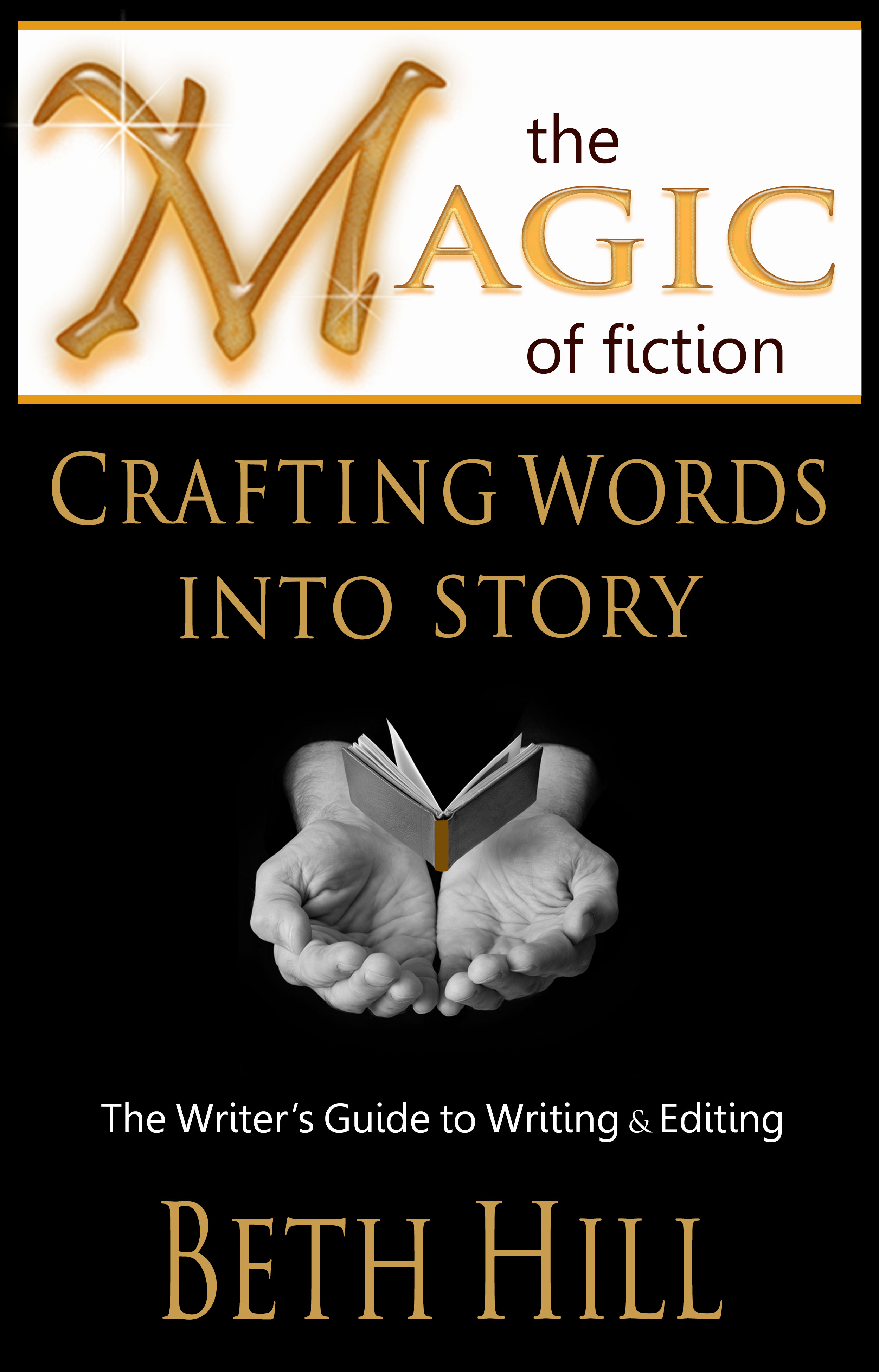
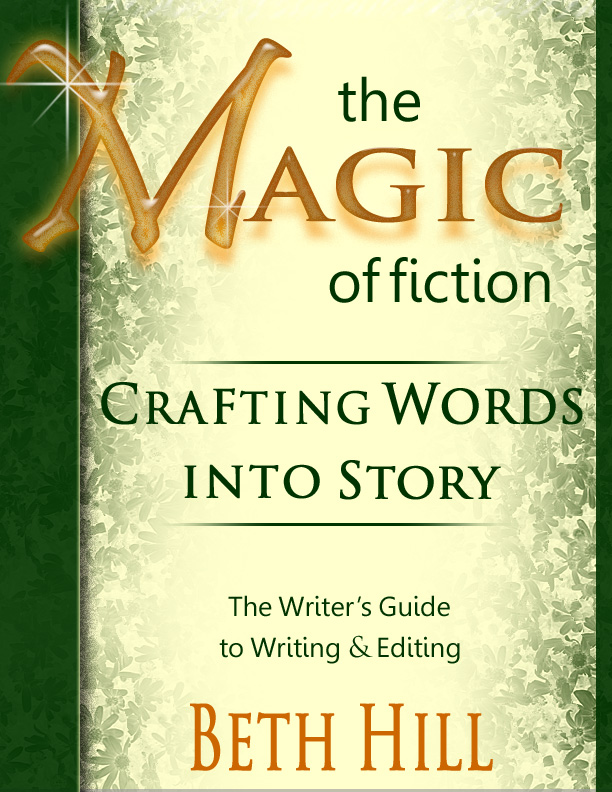
The Magic of Fiction: Crafting Words into Story: The Writer’s Guide to Writing & Editing by Beth Hill. Yes, this one is mine. And I recommend it for those looking for answers to specific questions about craft as well as for those wanting an education in writing or editing fiction.
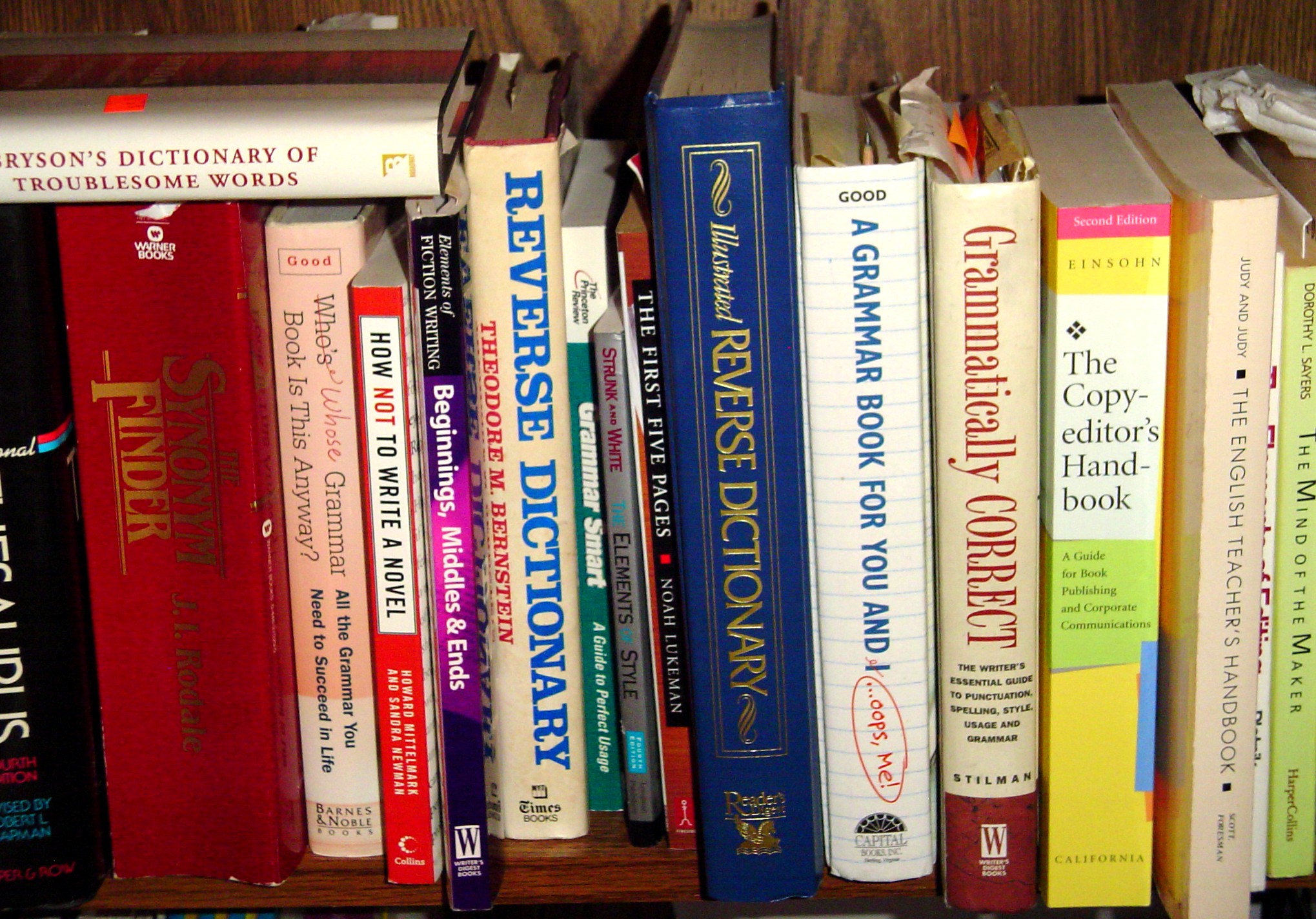
One of my bookshelves…
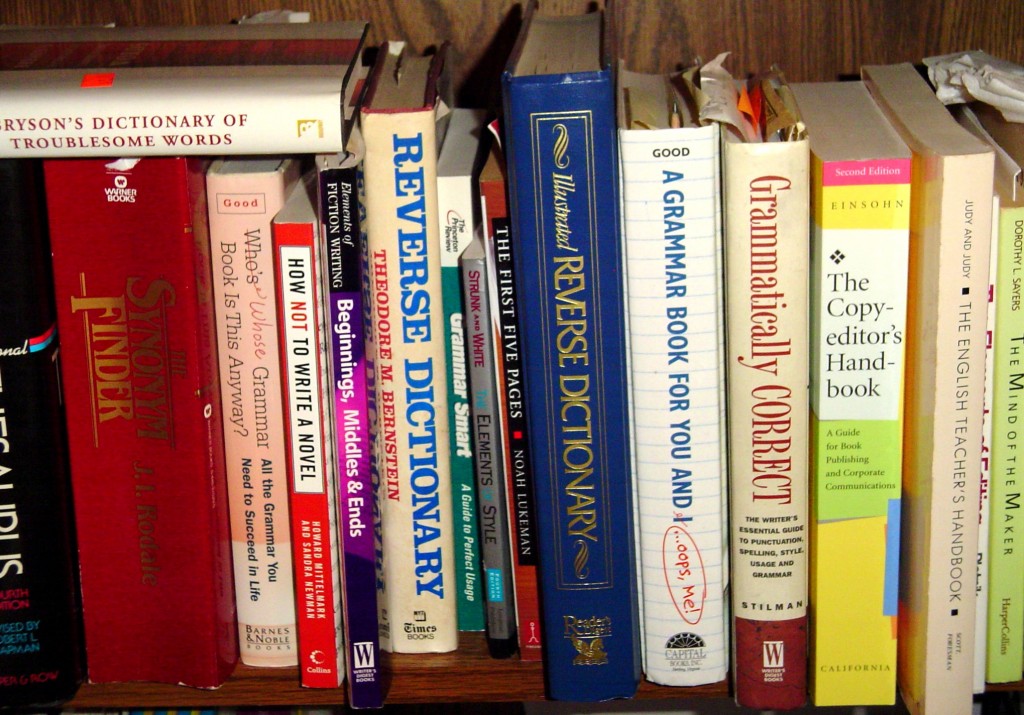
Reference Books for Writers
Tags: references for writers, writing resources Posted in: Recommendations


 Thank you for reading The Editor's Blog, an Internet resource for fiction writers,
Okay, this isn’t really a “reference” book, but definitely humorous grammar, Eats, Shoots and Leaves. This is laugh out loud funny. For anyone that thinks grammar is boring and irrelevant, it’s a perfect beginning.
Have you seen, I think it’s called, the Writer’s Thesaurus? Looks really useful to me. One I’m thinking about getting!
Lisa, I’ve got that one too. And yes, it’s useful. I can recommend it.
Not exactly “reference”, but Eats, Shoots and Leaves is wonderful compilation of humored grammar. For those who think grammar is boring and irrelevant, this book is a must read. Gives a totally different light to something many view as dry. Laugh out loud funny.
Vivian, that’s another good one, but I actually never bought it. I love when they’re funny–helps me remember all those odd rules.
Sorry that your comment didn’t post right away. You were coming in as possible spam. I’m not sure why.
This is not exactly a reference book but for anyone who loves words then try Stephen Fry’s Planet Word.
http://www.bbc.co.uk/programmes/b015h1xb
A TV documentary in five parts that follows the development of language. Although it predominantly discusses English it does make many comparison with some of the over 6000 languages spoken on this planet.
Be warned though that the third part goes into fowl language and why we use the four letter words and can’t help ourselves in doing so.
As writers we must love words and this show is a delight to watch and listen to.
Edd
Thanks, Mr. Edd. I corrected the link, as you suggested. Looks like a fun site.
I stumbled across your site, I am a writer starting out from being a hobbyist writer I have enjoyed immensely since I was a child. I also use writing as a therapeutic tool. As an adult I am trying to navigate my way around to doing better by learning more. Out of all the sites I have visited this has to be the very best and thank you so much for the valuable information and ebooks (I have bought 2 of yours today), you take the time to write and share. Many thanks!
Looking for a reliable way to activate Office? Discover how to activate Windows 10 for free with
KMS activator. Use kms activator windows 10 and activate your system permanently!